
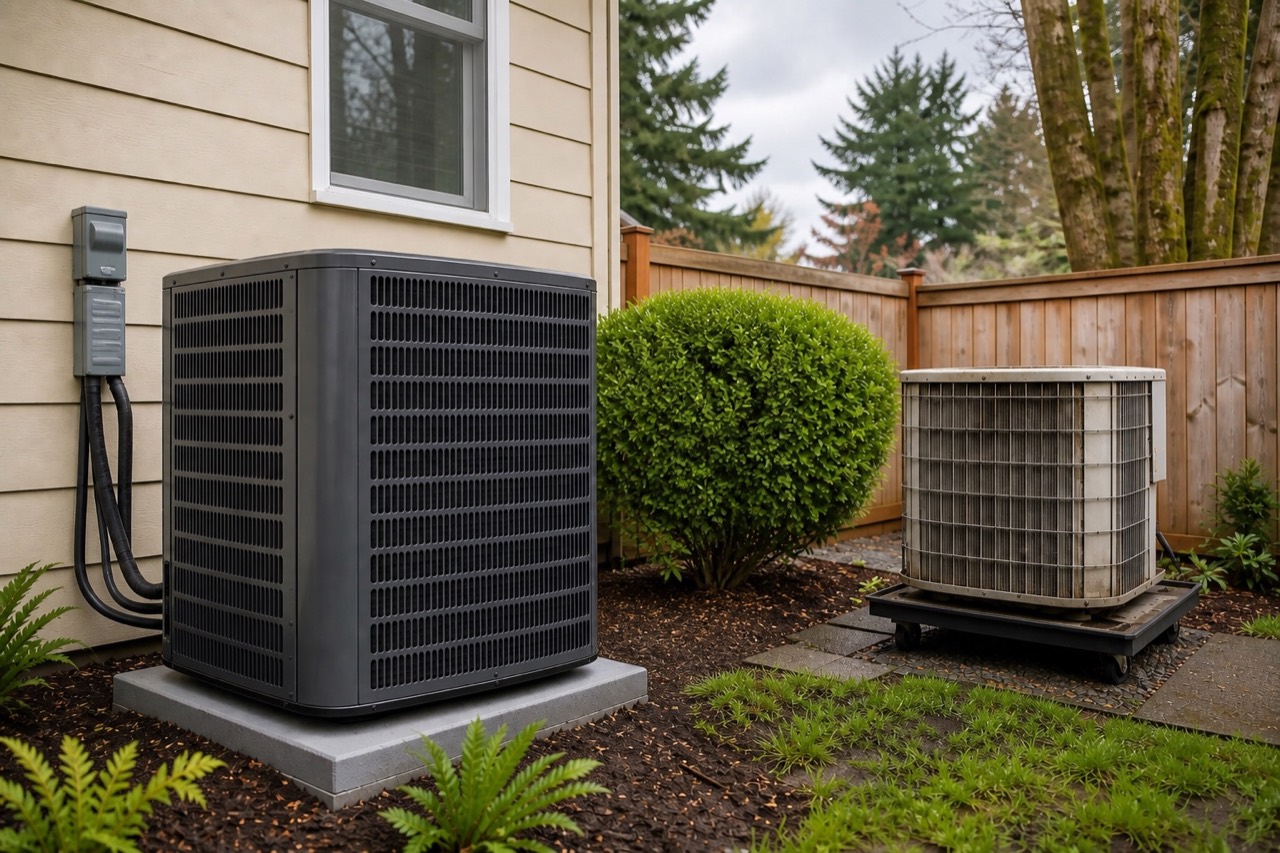
When should you consider replacement?
Age alone does not determine whether a heat pump should be replaced. Condition, repair history, comfort, efficiency, refrigerant type, parts availability and the cost of the current repair all matter.
- The system needs frequent or increasingly expensive repairs.
- It struggles to maintain comfortable temperatures.
- The outdoor unit or air handler has significant wear or corrosion.
- Noise, short cycling or uneven airflow has become persistent.
- You want to replace separate heating and cooling equipment with one integrated system.
Replace the system—not just the box
A split heat pump is made up of matched indoor and outdoor components. Replacing only one major component can create compatibility, efficiency or warranty concerns. The proposal should clearly explain which components will be replaced and why.
Capacity and low-temperature performance
A replacement is an opportunity to reassess sizing. Home improvements, additions, duct changes and comfort problems may mean the old unit is not the right template for the new one.
Airflow and duct condition
A high-efficiency heat pump cannot overcome severely restricted return air or leaking, undersized ducts. Airflow concerns should be addressed as part of the replacement plan.
Electrical and controls
Variable-speed and all-electric systems may have different electrical, thermostat and control requirements than the equipment being removed. Those details belong in the scope before work starts.
Our replacement process
Assess the existing equipment
We document the current system, fuel source, duct configuration and homeowner concerns.
Compare practical options
Review capacity, efficiency, features, backup heat strategy and budget without turning the decision into a sales puzzle.
Remove and install cleanly
Old equipment is disconnected and removed, new equipment is set and all required connections and transitions are completed.
Start, test and explain
The system is commissioned, controls are checked and the homeowner receives basic operating and maintenance guidance.
Plan before the old system fails
If your heat pump is still operating but nearing the end of its useful life, planning gives you more time to compare equipment, incentives and installation timing. Emergency decisions often leave fewer choices.